
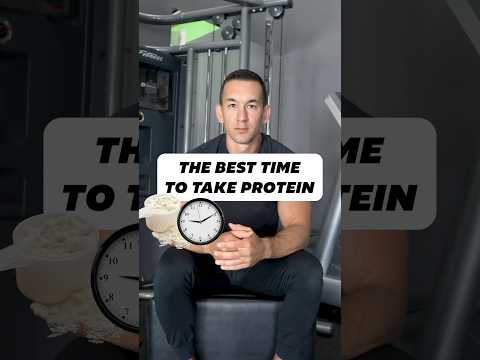
Try My TrainWise App Free For 7 Days from the App Store or at TrainWiseApp.com
—————————————-
This video breaks down a recent study on protein timing and its effects on muscle growth, strength, and body composition in resistance-trained males. The researchers compared two groups who followed identical high-protein diets while lifting weights for eight weeks. One group consumed protein immediately before and after training, while the other consumed it three hours before and after. Both groups consumed 2 grams of protein per kilogram of body weight per day, which is well above the commonly recommended threshold for maximizing muscle hypertrophy.
The findings? Both groups saw similar increases in skeletal muscle mass and strength. There were no significant differences between protein timing strategies. This adds to the growing body of evidence suggesting that total daily protein intake is far more important than when that protein is consumed around your workout. As long as you’re hitting your daily protein target and following a proper resistance training program, you likely don’t need to obsess over exact nutrient timing.
Body composition was assessed using bioelectrical impedance analysis via the InBody 770 device. While this method has limitations compared to more accurate tools like DEXA scans, the study controlled variables like hydration, fasting state, and measurement conditions to keep data consistent across participants. Skeletal muscle mass increased significantly in both groups, while fat mass and body weight remained relatively stable.
Training volume, strength performance, and muscular endurance were also measured using leg press, chest press, vertical jump, and Australian pull-up tests. Strength improved across the board, with no significant differences in performance outcomes based on protein timing. Biochemical markers like creatinine, liver enzymes, cholesterol, and urea were monitored as well, with only minor changes observed, mostly related to increased protein intake.
This study supports previous research showing that meal timing, while potentially useful in some scenarios, is not a critical factor for muscle growth if total daily protein is sufficient. Whether you’re consuming protein pre-workout, post-workout, or hours apart from training, the key variable is simply getting enough high-quality protein spread across the day. The study’s use of a consistent training program, matched dietary intake, and controlled lab conditions makes it one of the more tightly controlled investigations on this topic to date.
If you’ve been stressing over your anabolic window or worrying that your gains will disappear if you don’t chug a protein shake right after lifting, this study provides some relief. Focus on the fundamentals: train hard with progressive overload, hit your protein goals, and stay consistent. Protein timing might be the icing on the cake, but it’s not the cake. For most lifters, obsessing over exact timing is a distraction from the more important factors that actually drive muscle growth and strength.
#protein #fitness #gym #workout #buildmuscle #bodybuilding

👉 Need some help getting your fitness program onto the right track? Get my Free “No B.S. Hypertrophy & Fat Loss Guide” at SeanGuide.com.
What about training fasted?
The guy on the left looks bigger.
I always feel my recovery is faster when I sip a protein/carb drink DURING the training session. Timing for protein isn’t as important as total amount of it so maybe it’s more important to replace carbs burnt during the session ASAP to speed up recovery? Any more informed that have any ideas on the subject?
isn’t it that the “window of opportunity” just means more of what you consume will be used for recovery than stored, including carbs and sugars as well as protein?